Marloth Park weather by month
Summers here are hot and wet, and winters are warm and dry. Here are the monthly averages, what the heat and storms mean for your stay, and what to pack.
Last checked 26 October 2026
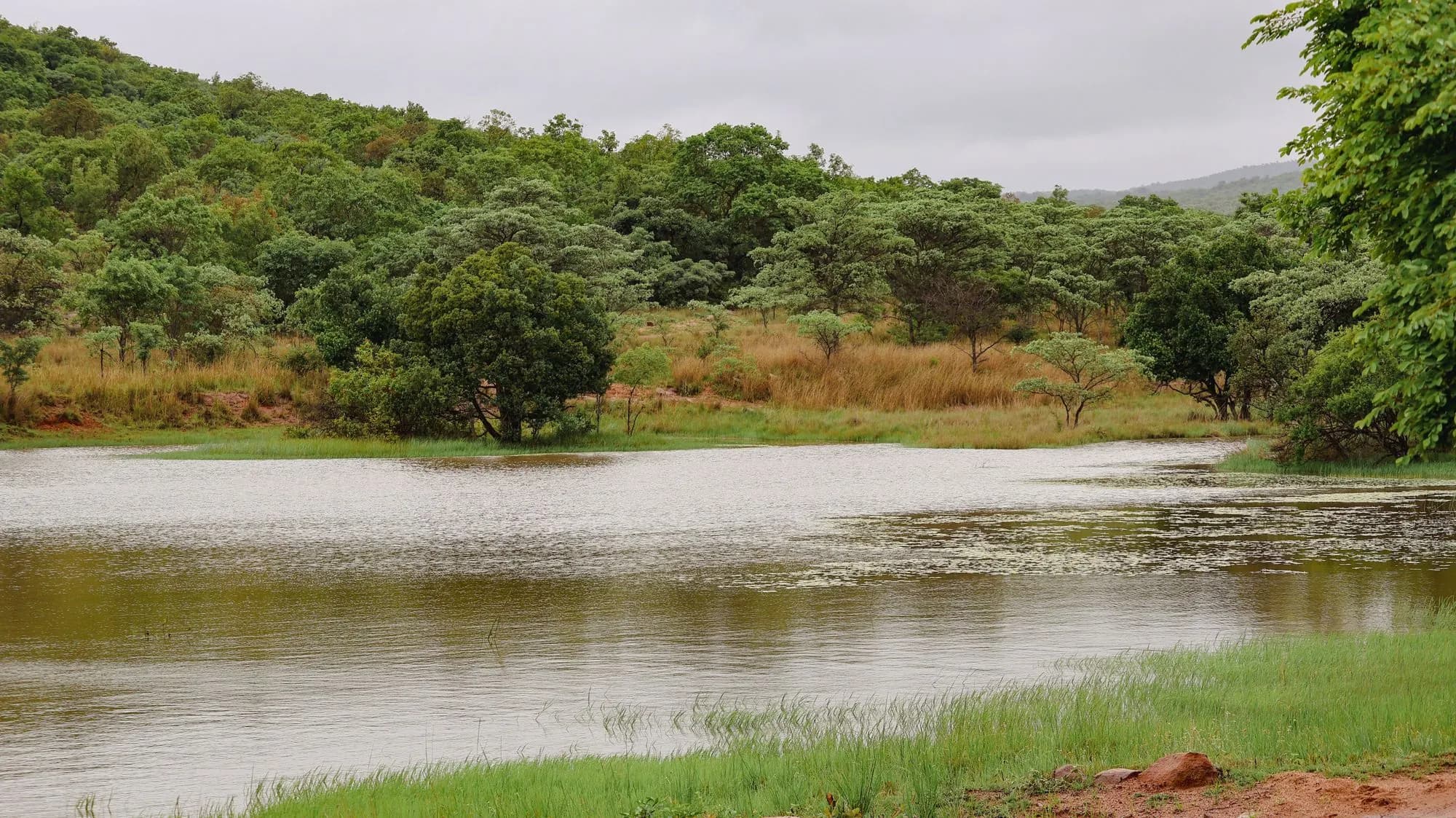
Summers (November to March) are hot and wet, with average highs around 31-32°C and about three-quarters of the year's rain. Winters (May to August) are dry and sunny, with days around 26-28°C and cold nights, down to about 6°C on average in June and July. Over the year the rain adds up to about 590 mm.
Monthly averages
| Month | Average high | Average low | Rain |
|---|---|---|---|
| January | 32.5°C | 20.8°C | 104 mm |
| February | 32.5°C | 20.9°C | 97 mm |
| March | 31.3°C | 19.6°C | 73 mm |
| April | 29.9°C | 15.9°C | 39 mm |
| May | 28.0°C | 10.6°C | 15 mm |
| June | 26.3°C | 5.9°C | 7 mm |
| July | 25.9°C | 6.6°C | 9 mm |
| August | 27.4°C | 8.8°C | 12 mm |
| September | 29.4°C | 13.2°C | 18 mm |
| October | 29.8°C | 16.5°C | 43 mm |
| November | 30.9°C | 18.5°C | 75 mm |
| December | 32.1°C | 20.0°C | 101 mm |
Last checked 26 October 2026
These are long-term averages from the weather station at Skukuza, in Kruger about 45 km north of Marloth Park, the nearest station with a long record. Marloth is in the same part of the Lowveld, so use the figures as a close guide to what to expect in town. Averages smooth out the extremes, too: a summer heatwave goes well past these highs, and a cold front can make a winter night much colder.
Summer (November to March)
Summer is hot, humid and green. Average highs are 31-32°C, and the nights stay warm, around 19-21°C. About three-quarters of the year's rain falls in these five months, often in thunderstorms. Gravel roads in Marloth get rough after heavy rain, and the Crocodile River can flood. In January 2026 floods closed Crocodile Bridge gate for about a week, and it reopened to day visitors on 22 January.
For your stay, that means:
- Plan Kruger drives and walks for early morning and late afternoon, and rest in the middle of the day.
- Choose a house with aircon in the bedrooms, and ask about backup power for storms.
- Drink more water than you think you need, and wear a hat.
- It's malaria season. Antimalarials are recommended from September to May in this area. See malaria.
The bush is thick and green in summer, so animals are harder to spot in Kruger.
Winter (May to August)
Winter is dry, with clear skies and very little rain. Days are warm, around 26-28°C, and nights are cold, with average lows of 6-9°C in June, July and August. Early-morning queues at the Kruger gate are chilly in an open vehicle. The bush thins out and animals gather near water, which makes winter the easiest time for game viewing for many people.
The veld is dry and burns easily in winter. Take care with braai fires, and never leave one unattended.
April, September and October
April is still warm, with the rain tapering off. September and October are the hot build-up to summer, with days around 29-30°C. September is still dry, and the rain starts to pick up in October.
What to pack
- Light, loose clothes for the day, and a hat, sunglasses and sunscreen all year.
- Long sleeves and long trousers for the evenings, for the mosquitoes as well as the cold.
- Insect repellent with DEET.
- A warm jacket and a beanie from May to August, for early starts and evenings on the stoep.
- A rain jacket from November to March.
- Closed shoes and a torch for walking around the garden after dark.
- Binoculars, for the river and for Kruger.
For when to come, and how the weather, school holidays and Kruger crowds fit together, see the best time to visit.
Read next
- Best time to visitDry winter or green summer: heat, rain, malaria, school holidays, game viewing, prices and December availability.
- MalariaYes, moderate risk. Antimalarials are recommended from September to May, and bite prevention all year. What to do and which symptoms to watch for.
 First visitYour first stay in Marloth Park: the gate and stand numbers, animals in the garden, feeding rules, no pets, power and water, shops and night driving.