Banded mongoose in Marloth Park
You'll often hear a troop of banded mongoose before you see them: a stream of small grey-brown bodies grunting to each other as they work through the garden. They're fun to watch and best left to it.
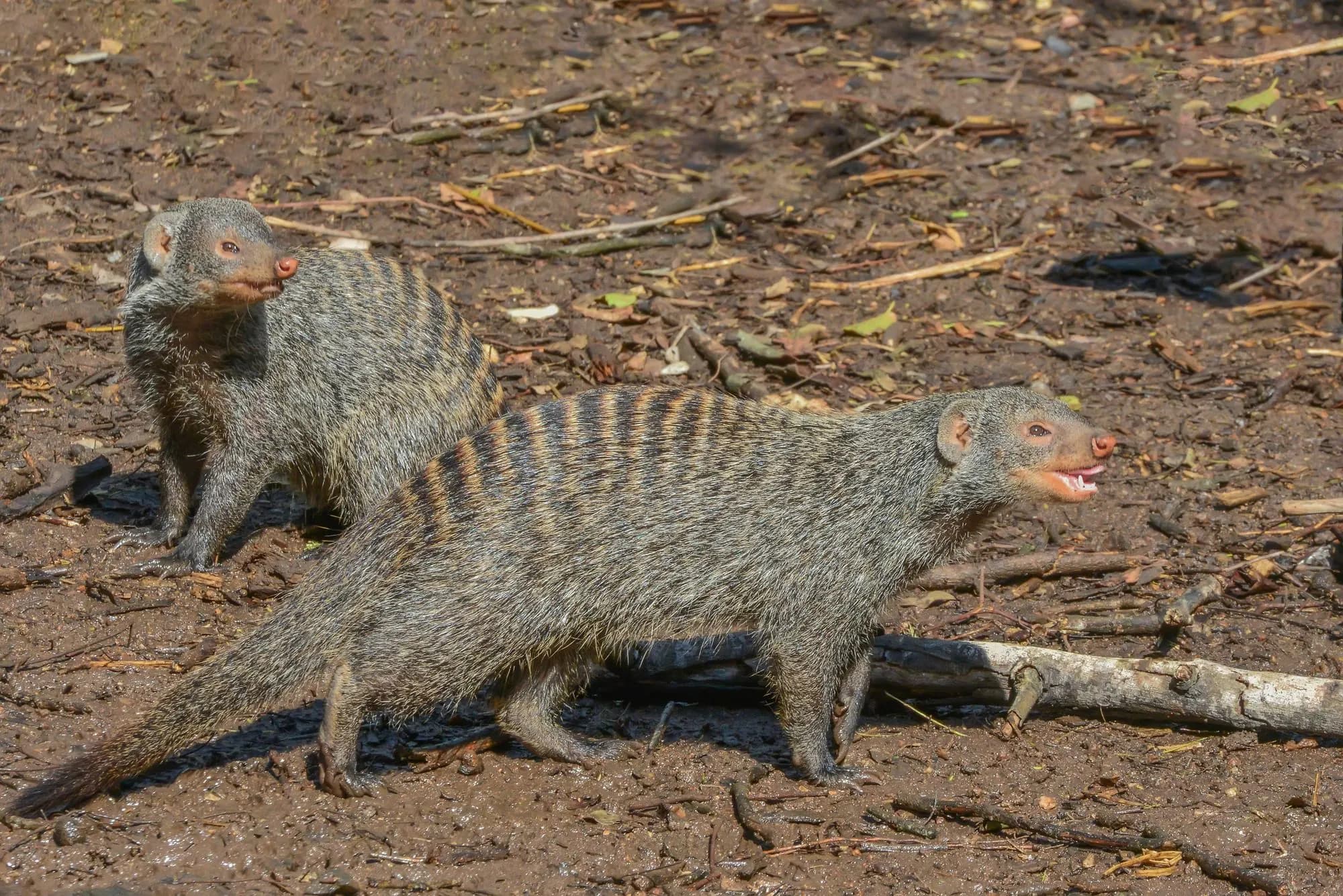
Banded mongoose are small grey-brown carnivores with dark bands across the back, and in Marloth Park they move through the gardens in troops by day. They hunt insects, millipedes and eggs, so don't feed them: the Marloth rule is antelope pellets and wild bird seed only, and neither is mongoose food. Keep your bins closed and food indoors.
What banded mongoose look like
A banded mongoose has a body of 30-45 cm, a tail of 15-30 cm and a weight of about 1-2 kg. The fur is grizzled grey-brown, with a row of dark bars across the back. Males and females look the same, so there's no easy way to tell them apart.
Where and when you'll see them
Banded mongoose live in troops, usually of 10-20 and sometimes many more. They're out by day. A troop forages for a few hours in the morning, rests in the shade through the heat and comes out again in the late afternoon.
At night the whole troop sleeps together underground, often in an old termite mound. They move to a new den every two or three days, which is why a troop can visit your garden every morning for a few days and then go elsewhere for a while.
As they forage, each mongoose keeps up a low grunt every few seconds so the others know where it is. That's the chattering you hear in the bushes.
The 2024-25 count found 10 troops in Marloth.
What they eat
Mostly millipedes and beetles, plus other insects, snails, frogs, small reptiles, eggs, the odd mouse and some wild fruit. They dig prey out with their claws. A mongoose with an egg or a snail stands with its back to a rock and flings the food backwards between its hind legs until the shell cracks.
The troop works as a team against snakes, cobras included. They'll also raid a bin left outside.
Why we don't feed them
Mongoose eat live food. Marloth's feeding rule is antelope pellets and wild bird seed only, which is for the antelope and the birds. Feeding only teaches a troop to come to people for food.
Rubbish is bad for them too, because mongooses that scavenge from bins pick up diseases. Keep bins closed, and take your recycling to the gates.
How close is too close
Banded mongoose aren't a danger if you leave them alone. Sit still and a troop may pass close by. Never pick one up, corner one or reach for a pup. If the troop bunches together with the young in the middle and stands up to look at you, you're too close.
Pups
Pups arrive in summer. All the females in a troop breed, and most give birth within a few days of each other, about two months after mating, with litters of 2-6. The pups stay in the den for about four weeks, guarded by babysitters, often adult males.
After that, each pup gets its own adult escort. The escort finds food for it, shares it and keeps it safe while the troop forages. You might see a small pup trotting at the heels of one particular adult.
Warthogs and mongoose
In East Africa, banded mongoose have been seen picking ticks off warthogs. See our warthog page for more on them.
Photographing banded mongoose
They move fast and rarely stop, so use a fast shutter speed and shoot bursts. Get low, at their eye level, and pick a spot near where the troop crossed the day before, then wait. When one stands up on its back legs to look around, that's the shot to wait for.
Questions people ask
Are banded mongoose dangerous?
Not if you leave them alone. They're wild animals with sharp teeth and will bite if they're handled or cornered, so don't touch them or let children chase them.
Can I feed the mongoose?
No. Marloth's feeding rule is antelope pellets and wild bird seed only, and neither is food for a mongoose.
Why did the mongoose troop stop coming?
Troops move to a new den every two or three days, so their route through the gardens keeps changing.
When are mongoose pups born?
In summer. Pups first come out of the den at about four weeks old. See our wildlife guide for the other animals in the garden and the rules page for Marloth's rules.