Warthogs in Marloth Park
Warthogs are the busy grey pigs grazing the verge on their knees, tails up the moment they trot off. They're easy to like and easy to watch, as long as you give the sows with piglets room.
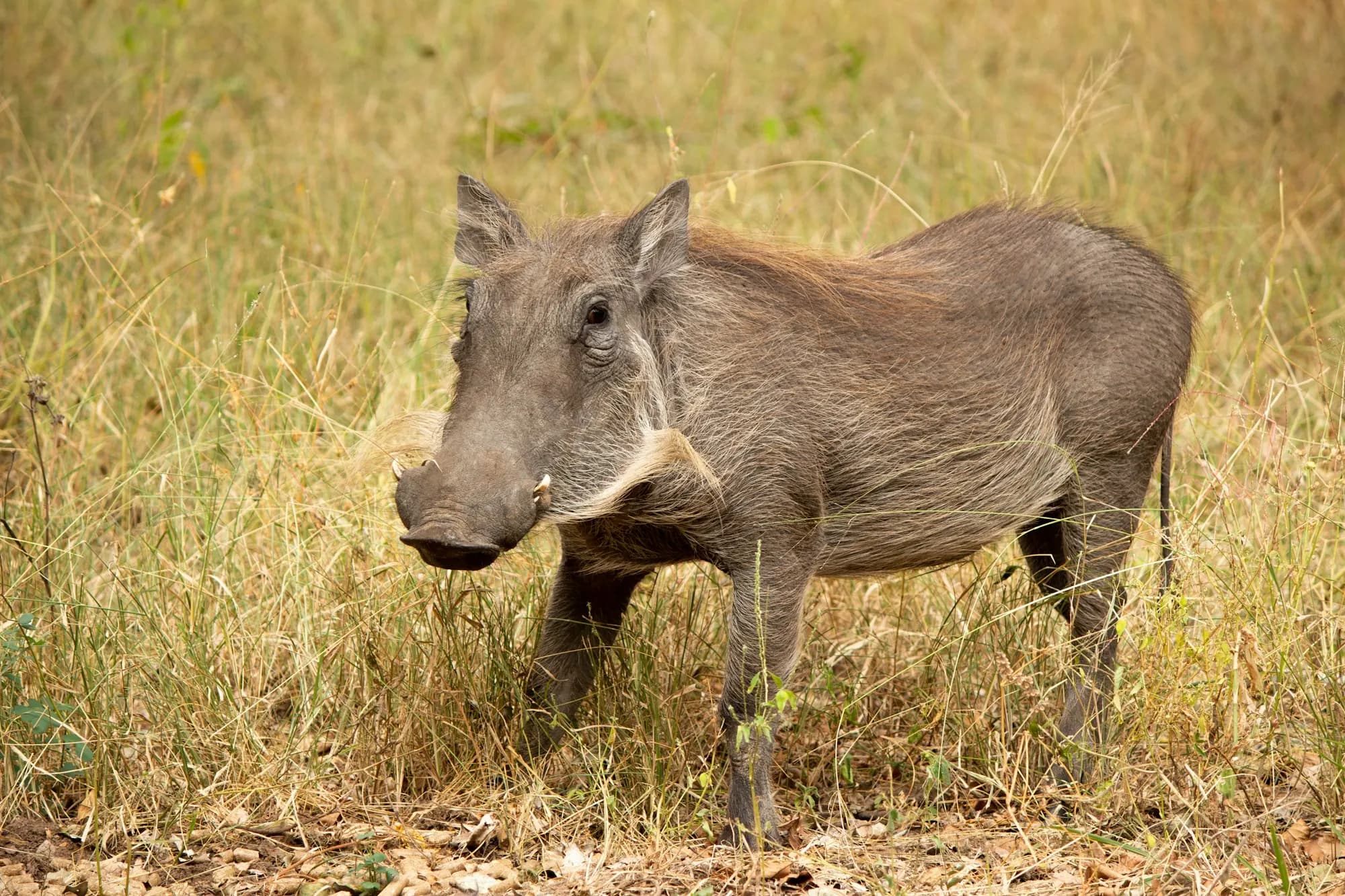
Warthogs are wild pigs with curved tusks, and in Marloth Park they graze the verges and gardens by day and sleep in burrows at night. Give them space, especially a sow with piglets, and never hand-feed them. If you put food out, the rule is antelope pellets and wild bird seed only.
What warthogs look like
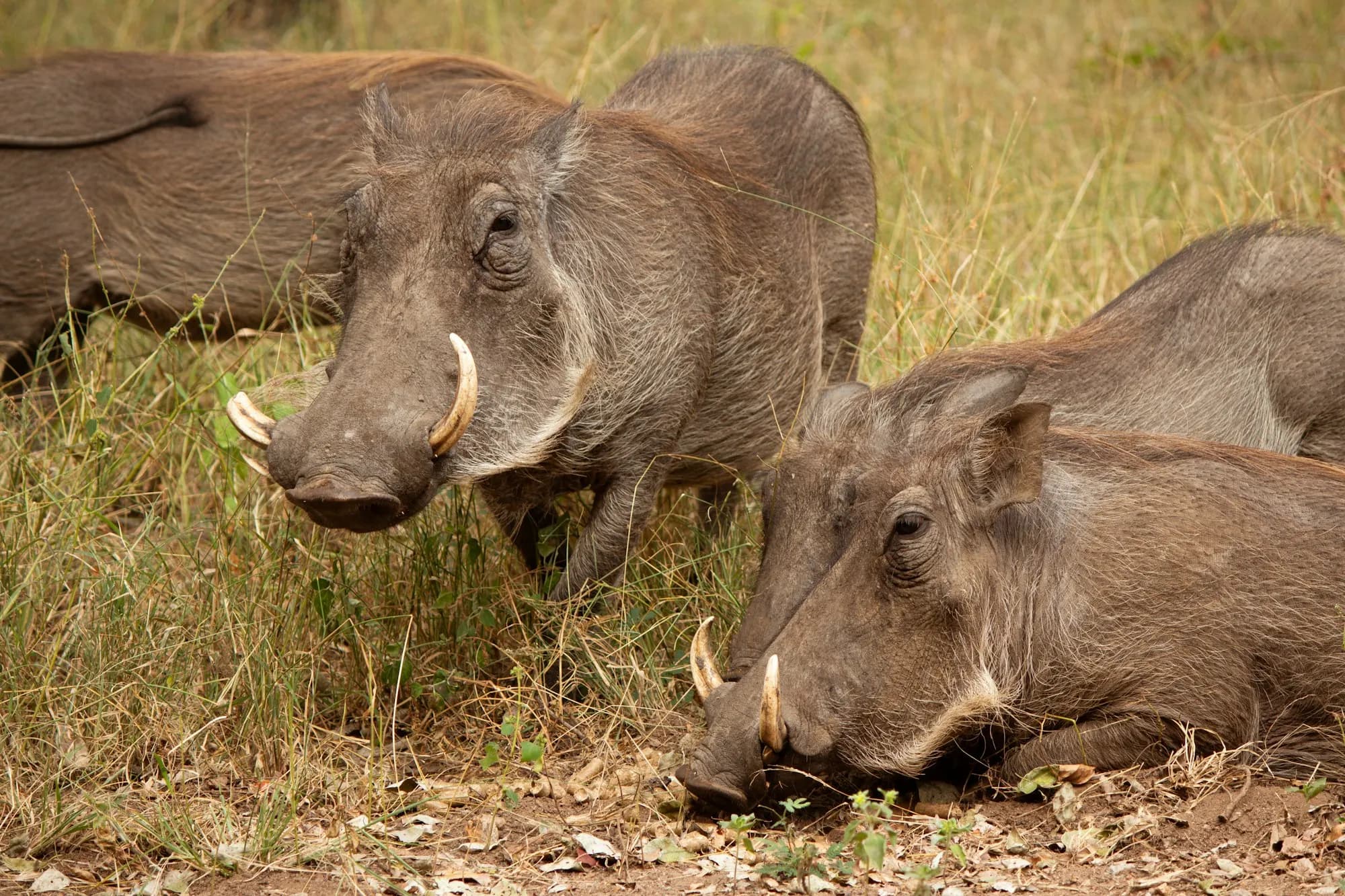
A warthog is a grey pig with sparse hair, a long mane down the back and a thin tail with a tuft on the end. Both sexes have two pairs of tusks. The upper pair curves out and up and can grow to about 25 cm. The lower pair is shorter and stays sharp because it rubs against the upper pair. The "warts" are thick pads of skin on the face that protect it when boars fight.
Boars and sows
Boars are much heavier, at 60-150 kg against 45-75 kg for a sow, and they have two pairs of warts where a sow has one smaller pair. Next to each other, the boar looks like he's been built for shoving.
Where and when you'll see them
Warthogs are out during the day and spend the night in burrows, often old aardvark holes. They reverse in, so the tusks face the entrance. A sow lives with her young in a small family group, called a sounder. Boars live alone or in bachelor groups and join the sows to mate.
You'll see them grazing on the verges, the lawns and any open patch of short grass. They kneel on hard pads on their front legs to get their mouths close to the ground. On hot days they wallow in mud wherever they find it.
The 2024-25 count found 256 warthogs in Marloth, up from 168 the year before. In 2025, 150 were moved out to ease the overgrazing.
What they eat and the feeding rule
Warthogs eat almost anything. In the rains they graze short grass, and in the dry season they dig up roots and bulbs with their snouts. They also eat fruit, bark, insects and eggs.
If you feed at all, the rule is antelope pellets and wild bird seed only. Scatter it widely and step back. Bread and mealies make them ill. Never feed from your hand, because those tusks are close to your fingers.
How close is too close
Most warthogs trot off when you come near, tails straight up like a radio aerial. A sow with piglets is different. She'll defend them, and a warthog can run at close to 50 km/h. Watch from the stoep or the car and never walk between a sow and her young. If there's a burrow in the garden, keep clear of it around dusk, when they head home.
Keep children close outside, and don't let them chase warthogs for a photo.
Piglets
Sows come into season around May. After five to six months the piglets are born in a burrow at the start of summer, after the first rains. Before she gives birth, the sow chases off her previous litter.
A litter has 2-8 piglets, usually about four, and each piglet keeps to its own teat. They start grazing at two or three weeks old and are weaned by six months. Early summer, when the little ones trot after their mother, is a good time to have a camera ready.
Warthogs and mongoose
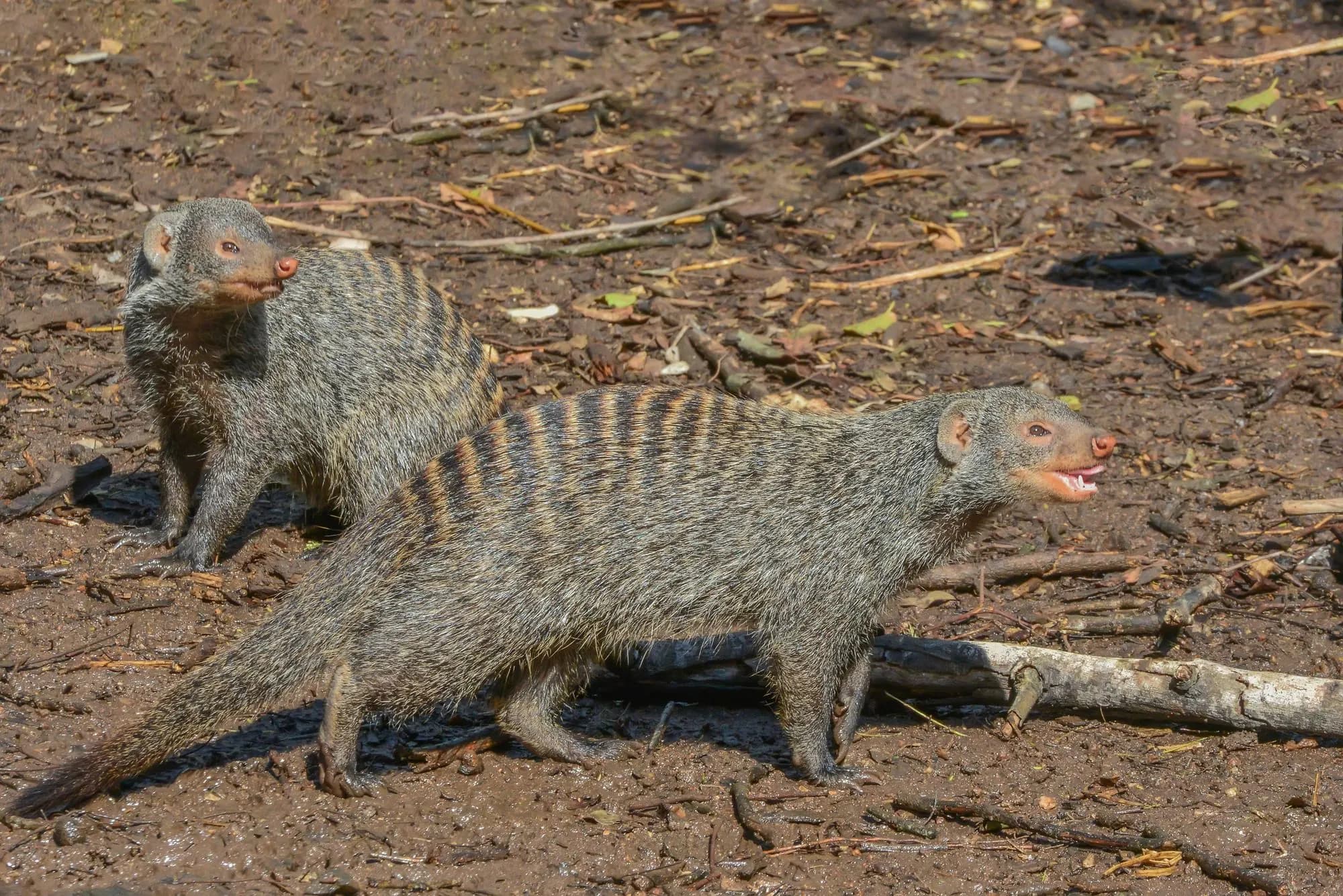
In East Africa, banded mongoose have been seen picking ticks off warthogs. It's worth watching for when a mongoose troop and a warthog family share the lawn. More on them on our banded mongoose page.
Photographing warthogs
Get low. A photo from the level of a kneeling warthog shows its face and tusks far better than one from the stoep above. Use a fast shutter speed for running warthogs with their tails up. Early and late light works best, and summer brings the piglets.
Questions people ask
Are warthogs aggressive?
Not usually. They run away from people. A sow will defend her piglets, and any warthog can hurt you with its tusks if it's cornered or fed by hand, so give them room.
Why do warthogs kneel?
To graze. They drop onto hard pads on their front legs to get their mouths down to the short grass and to dig up roots.
When are baby warthogs born?
At the start of summer, after the first rains. Sows usually have about four piglets.
Can I feed the warthogs?
You can put out antelope pellets and wild bird seed only, scattered on the ground and never by hand. The rules page has the rest of Marloth's rules, and our wildlife guide covers the other animals in the garden.